Our Model
OUR MODEL
Acquire. Restore. Hold.
The Revil Foundation closes the gap between what it costs to fix a house and what an appraiser in a disinvested market says it is worth.
Everything below is an explanation of why those three words are harder than they sound, and why
almost nobody does all three
The gap
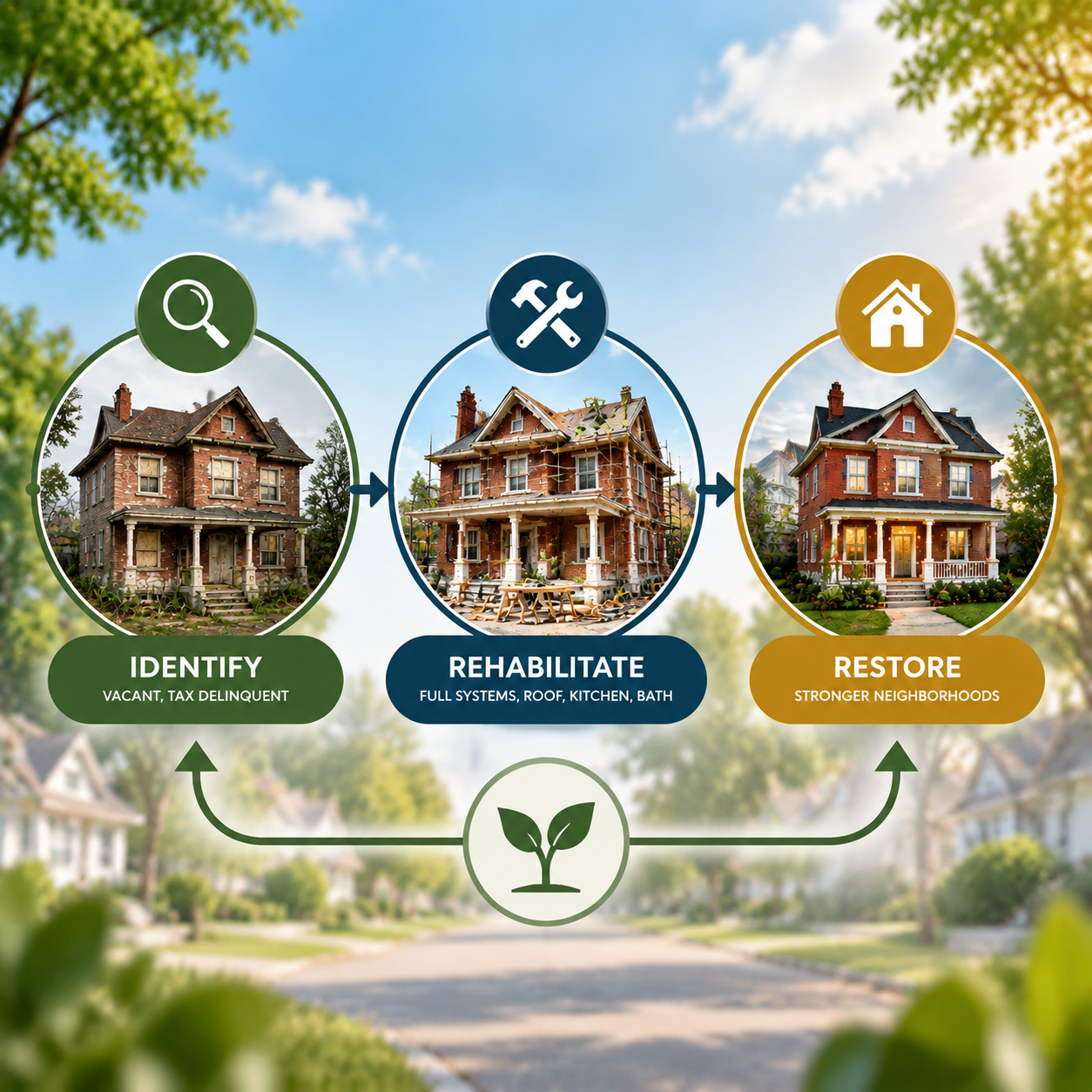
We focus on restoring homes, strengthening neighborhoods, and creating opportunities that help communities grow and thrive.
| A Typical House | What It Means | |
|---|---|---|
| Acquisition | $25,000 | Vacant, tax delinquent |
| Rehabilitation | $90,000 | Full systems, roof, kitchen, bath |
| Total Invested | $115,000 | |
| Appraised Value When Finished | $70,000 | Set by depressed comps |
| The Gap | $45,000 | What no lender will finance |
A bank will lend against the seventy, not the one hundred fifteen. A private investor needs the finished value to exceed the money in, and here it does not. So the rational actor walks away, and the house stays boarded for another year, and the roof lets a little more water in, and next year the number is worse.
Multiply that by a few thousand houses and you have West Louisville
The market is not failing to notice these houses. It is correctly pricing eighty years of policy, and then walking away from the result.
The gap is not a flaw in the model. The gap is the model. Charitable capital exists precisely to fund
things that produce real value and will never produce a market return, and restoring a family’s house in a redlined neighborhood is one of the clearest examples there is
Acquire
We buy vacant and deteriorated single family homes and duplexes, along with the empty lots between them. We buy quietly and at basis, through tax sales, land banks, estates, and owners who have been holding a property they cannot afford to fix. We buy in clusters wherever we can. One restored house on a street of boarded ones helps one family. Four on the same block changes what every house on that street appraises for, what the neighbors can borrow against, and whether anyone else decides to invest there. Concentration is not a preference. It is what makes the work compound.
Restore
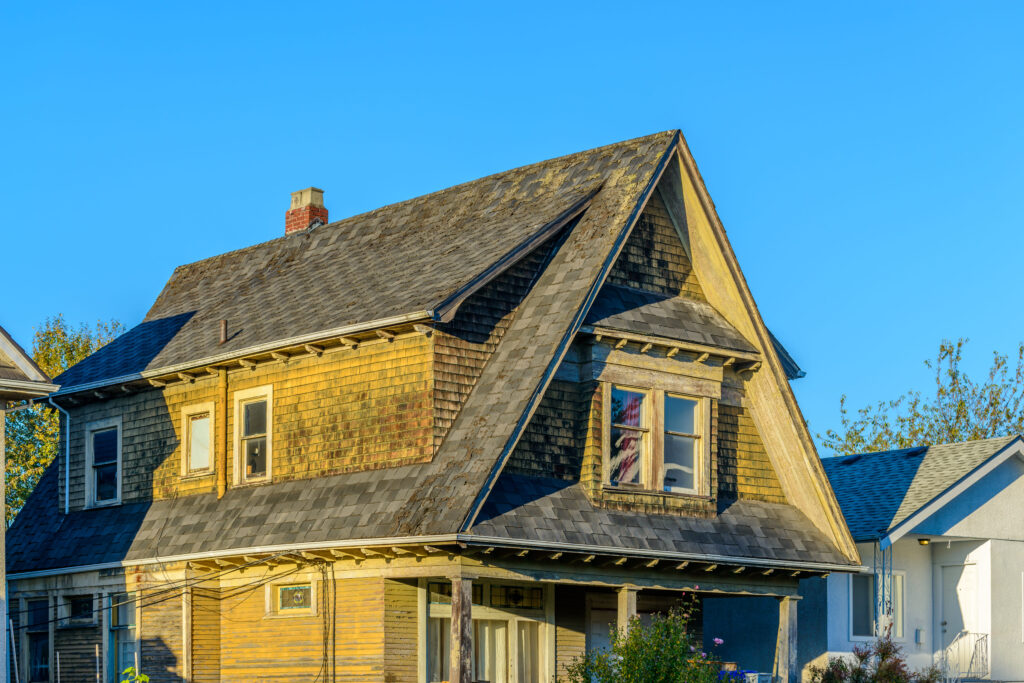
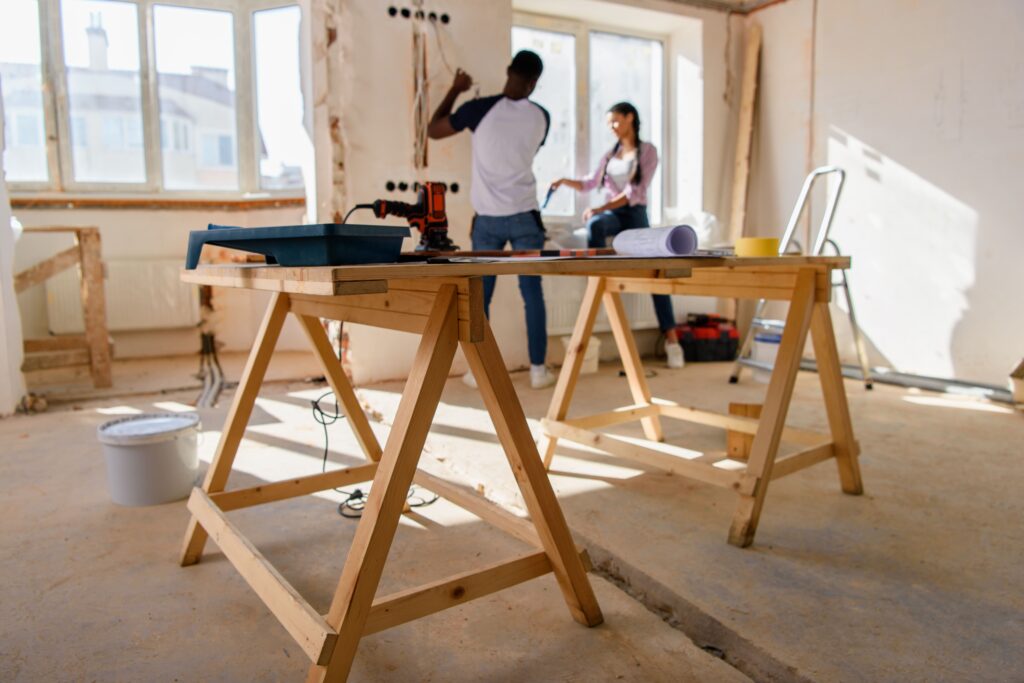
We rehabilitate to a standard people want to live in, not to the minimum that passes inspection. Systems, roof, envelope, kitchen, bath. Energy performance that lowers the utility bill, because a low rent with a two hundred dollar winter gas bill is not affordable housing. Where a structure is genuinely beyond saving, we take the lot and build new on it, at a scale and style that belongs on the street rather than announcing itself as subsidized.
Hold
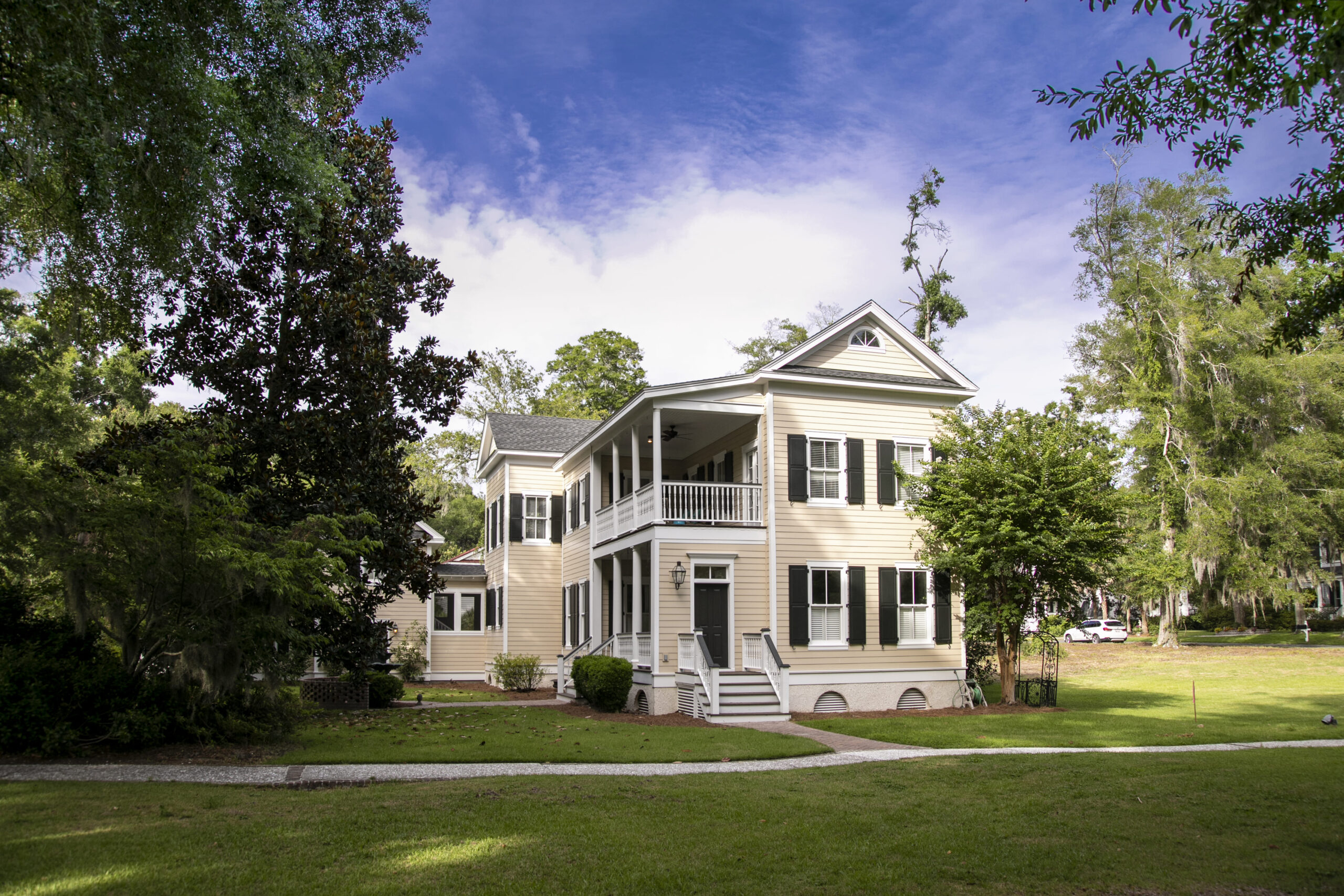
The Foundation keeps ownership. Permanently. This is the part that separates us from nearly everyone else working on the same blocks, and it is worth being precise about why.
A developer who sells
converts a public subsidy into a private gain and leaves. The house is fixed. The neighborhood keeps none of the upside.
A covenant expires.
Most affordable housing programs restrict rents for fifteen, thirty, or forty years, and then the clock runs out and the unit converts to market rate. Affordability built on a deadline eventually stops being affordable.
Ownership does not expire.
When the Foundation owns the asset outright and answers to a charitable purpose rather than to investors, the rent stays low because there is nobody to raise it for.
What happens to the rent
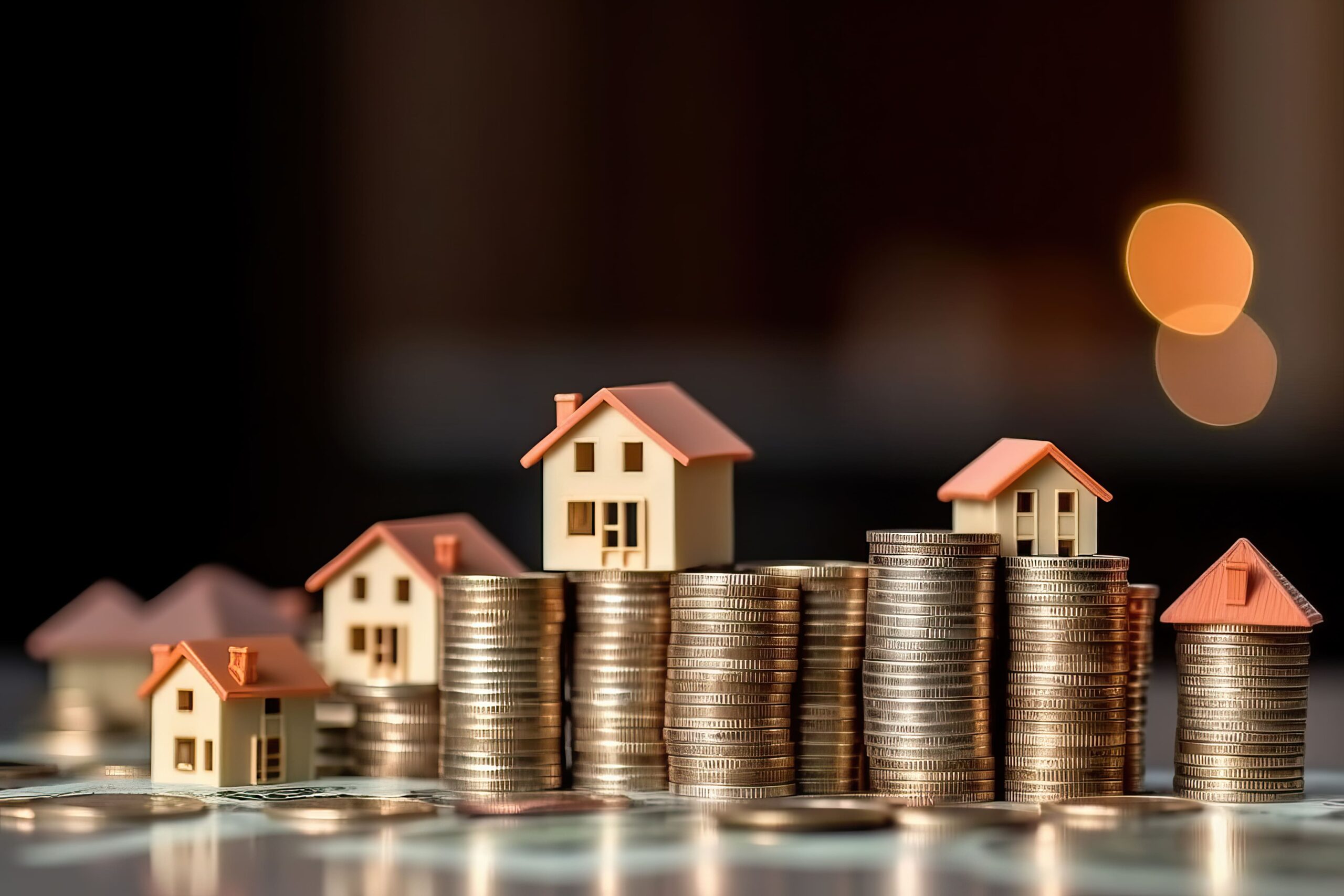
Rent from a restored house pays that property’s taxes, insurance, and maintenance first. What is left funds the Foundation’s operations and the next acquisition.
This is deliberate. Every house we finish becomes a small permanent contribution to the next one.
The first houses are entirely donor funded. Over time an increasing share of the work is funded by the portfolio itself, and the Foundation grows less dependent on any single funder.
It is slow. A portfolio does not become self sustaining in three years. But the direction is the point, and it is the reason we hold rather than sell.
Where the money comes from
Restoration costs more than the finished house appraises for, so the capital that closes the gap cannot expect a market return. Four sources do that work.
Grants and donations.
The primary source, and the only one that can absorb the gap outright.
Program related investment.
Low cost, patient debt from foundations and mission lenders, priced to the charitable outcome rather than to the collateral.
Conventional debt where it works.
Once a property is restored, occupied, and producing rent, some of it can carry ordinary financing, which recycles capital into the next house.
Public subsidy and tax credits
Where a property qualifies, layered in rather than depended on, because programs change and neighborhoods should not have to wait for a funding round.
Why this is repeatable
Nothing in this model is specific to Louisville. The appraisal gap exists in every city where disinvestment was policy, which is most of them. What is specific to us is the discipline of doing it in one place first, at real scale, with the ownership held long enough to prove that the numbers hold across a full cycle. A model that has not been operated through a full cycle is a theory. We would rather be able to show the fifth year of a real portfolio than the first year of five.
What we do not do
We do not flip. We do not assemble a portfolio to sell to an institutional buyer. We do not displace a sitting tenant to renovate around them. We do not take on a block we cannot afford to maintain for twenty years. Saying that plainly matters, because every one of those things has been done in West Louisville before, and the neighborhood has learned to ask.
PARTNER WITH US
Together, We Can Create Lasting Community Impact
The Revil Foundation works with organizations, supporters, and community partners who share our vision of restoring homes, strengthening neighborhoods, and creating opportunities for future generations.